
Water conservation is at the forefront of the Active Management Area (AMA) plan by the Arizona Department of Water and Resources. Life in the desert is getting hotter and drier. Native plants, including the iconic saguaro cactus, are struggling to thrive. Under the AMA, Blossom Rock is part of the 82% of the state’s population that must comply with the statutory management goals.
DLC Resources and the community are actively using methods to stay water-wise and support the health of plants and trees.
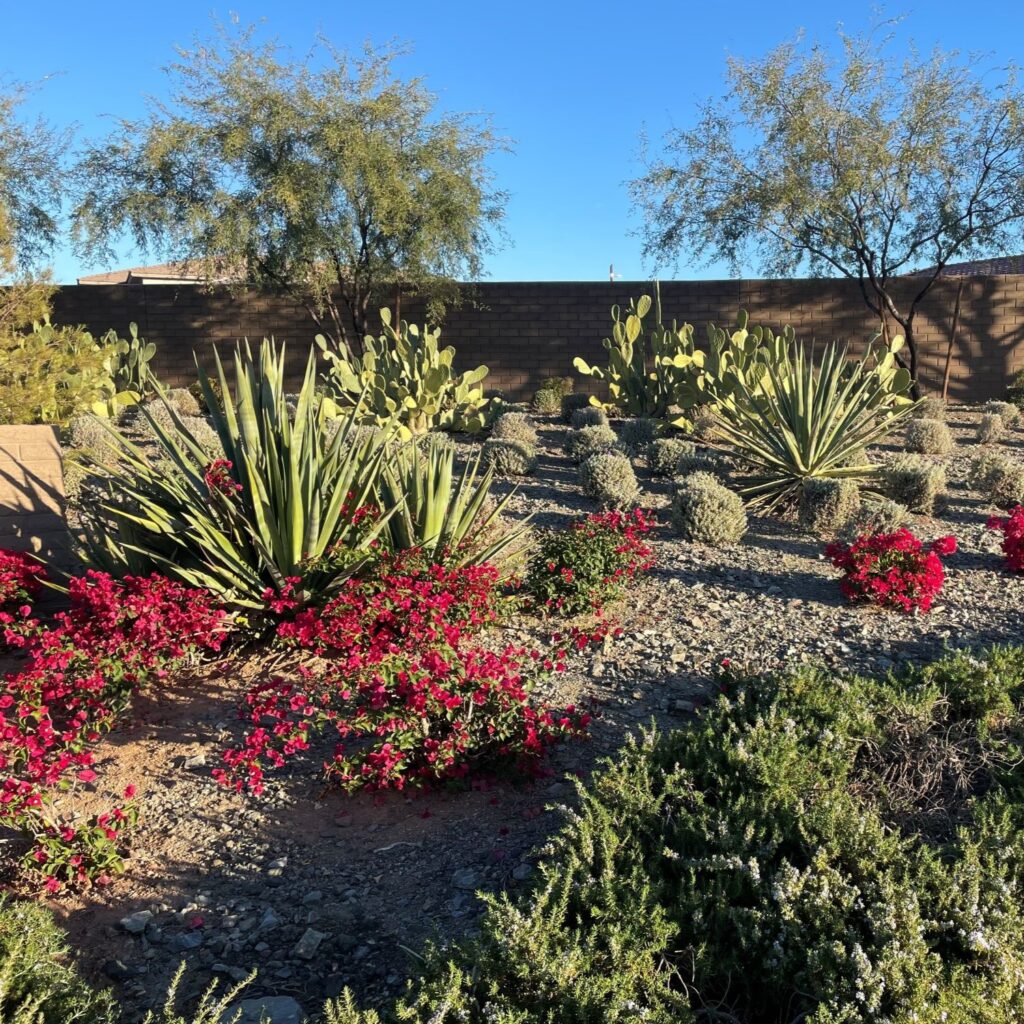
While your Blossom Rock operations team and landscape providers are looking at various ways to adapt to the changing climate, their sustainable landscaping approach has been key in minimizing plant loss, conserving water, and cutting costs. Many of Blossom Rock’s plants are already drought resistant and heat tolerant, and if they do perish, the team considers whether a replacement is needed.
Climate-appropriate landscape design supports a healthy, functional, and attractive landscape using natural resources efficiently and responsibly. It considers an area’s specific climate, soil type, topography, water supply, ecosystems, and human uses. And it supports the natural growth cycles of trees and plants to boost their overall health and vigor.
If you’re not familiar with sustainable landscaping, here’s a quick look at its many benefits for our community.
Plants and shrubs
Plants are pruned seasonally to support healthy regrowth. Maintenance is minimal and takes place around regular growth seasons. When plants are trimmed, it’s done in a manner that follows the organic shapes and patterns.
Cropping into unnatural forms reduces flowering, harms plant health, and requires more water for growth. Since plants are pruned only a few times a year, they’re given a significant clipping to allow for regrowth and flowering. While it may look alarming, rest assured the plants will grow back healthy and strong.
Trees
Pruning trees for height reduction and canopy thinning at specific times of the year. This supports sound structures that can withstand high winds without being uprooted or suffering limb breakage. Dead and downed trees are removed or maintained as needed, and care of our community’s largest trees is scheduled with an arbor management team.
Retention areas and washes
In the fall and winter, densely populated areas are thinned. Plants like brittlebush, for example, germinate easily, grow thickly, and choke out other plants as they compete for resources.
The native areas of Blossom Rock were intentionally built into the community master plan to help prevent erosion and preserve the land’s natural beauty. Very little maintenance is done in these areas.
It’s essential for desert areas to go through their natural life and death cycles as plant decay leaves behind nutrients for the next generation.
What are the benefits?
Cost savings
Sustainable landscaping uses native, low-maintenance plants that require minimal extra nurturing, landscape staff time, and resources. This decreases costs for landscape maintenance hours, water, fuel, fertilizer, pesticides, and plant and tree replacements.
Health and strength
The summer’s unrelenting heat and little to no rain is hard on plants and trees. Pruning puts them under even more stress. That’s why most maintenance is saved for the cooler months so plant material and soil can stay stronger longer.
Water conservation
Water restrictions are already in place from federal and state governments, and more are on the way. The use of native, drought-resistant plants that have adapted to the local climate, in conjunction with water-saving irrigation systems, reduces the amount of water that’s needed. Plants left to their natural shapes also demand less water as they grow.
Aesthetics
You’ll be able to enjoy the blooms year-round — a sustainable landscape that is left to grow more attractive than over-pruning. As a bonus, it provides a habitat for local wildlife and bees.
Waste reduction
Climate-appropriate landscaping eliminates unnecessary pruning, reducing the debris and green waste in landfills.
5 ways to transform your yard
- Invest in a smart irrigation controller that can automatically adjust to changes in the weather.
- Select plants and shrubs from Blossom Rock’s approved plant list that are drought tolerant and low water use varieties.
- Avoid trimming plants and shrubs during seasons of high heat and stick to pruning just once or twice a year.
- Look into planting more trees to help reduce ground temperatures during hotter months.
- Consider skipping overseeding, switch from Bermuda and Winter Rye grasses to decomposed granite or artificial turf, following the Blossom Rock Design Guidelines.
More ways to help
Following a sustainable landscaping approach is the first phase in supporting water conservation efforts and adapting to a hotter, drier climate. Stay tuned as design guidelines evolve to allow residents to adapt some of these same practices in their own yards.
Sustainable landscaping has a minimal maintenance schedule, so more frequent trimming can harm the health of plants and trees. As tempting as it can be, please refrain from cutting or removing landscape in the common areas. If you see a section that needs some TLC, please submit a community concern form. We appreciate your support and mindfulness in preserving the vitality of our community’s landscape.
If you’re interested in learning more about sustainable landscaping practices, check out the American Society of Landscape Architects site for photos, videos, and case studies.