
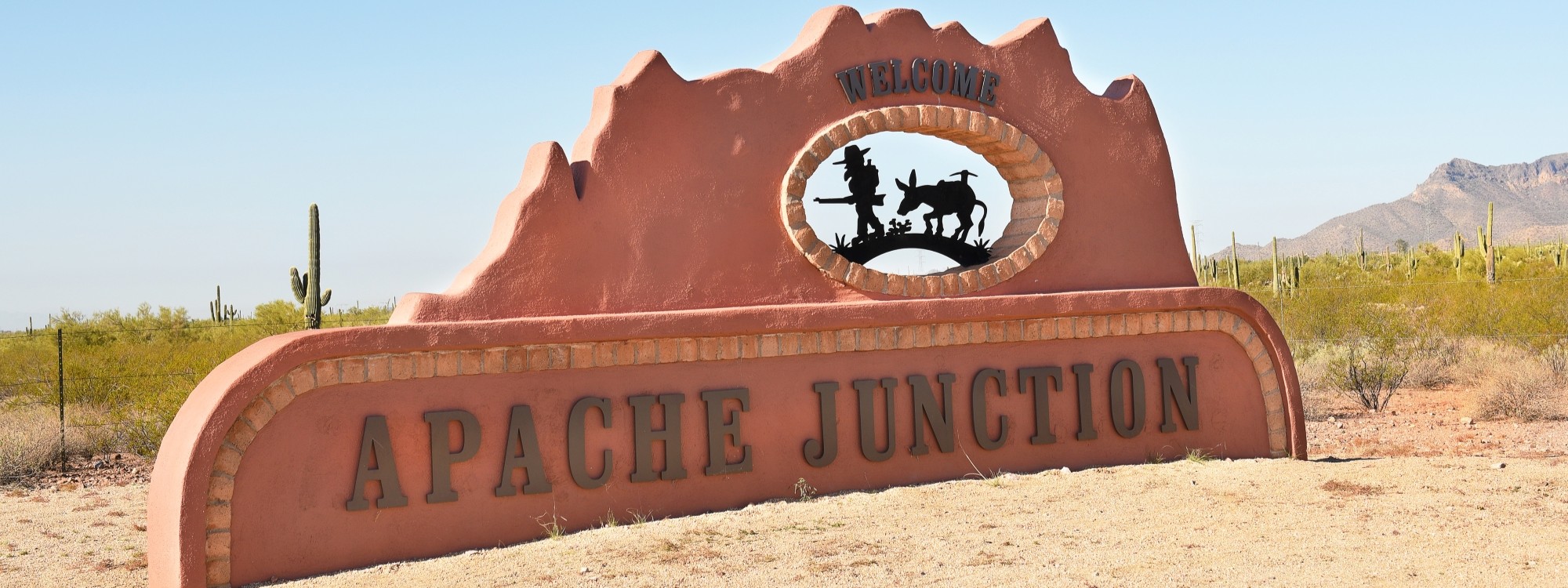
Before Blossom Rock began blooming, before Apache Junction became a city, and long before prospectors went looking for a certain elusive gold mine, generations of people were already connected to this remarkable corner of the Sonoran Desert.
From Indigenous homelands and historic travel routes to mining camps, movie sets, and a brand-new city finding its identity, Apache Junction has never been short on stories.
Long before there was a junction
The history of this land did not begin with miners, ranchers, or settlers.
For centuries, Indigenous peoples lived in and moved through the mountains, valleys, and desert surrounding present-day Apache Junction. Earlier cultures left archaeological sites, pottery, cliff dwellings, and petroglyphs throughout central Arizona. Later, the Yavapai and Western Apache, or Ndee, developed deep relationships with the broader region’s water sources, plants, wildlife, and natural travel corridors.
The Yavapai and Apache are distinct peoples with different languages and cultures, although early settlers often confused them or grouped them together under inaccurate names. Both lived in central Arizona and faced the loss of traditional lands as mining, settlement, and military activity increased during the 19th century.
For the Western Apache, mountains and desert corridors were not empty spaces waiting to be settled. They were part of a living landscape used for hunting, gathering, trade, ceremony, and seasonal travel. Apache communities resisted encroachment on their homelands for decades. Beginning in the 1870s, the U.S. government forcibly removed thousands of Western Apache, Yavapai, and other Indigenous people to the San Carlos Reservation under devastating conditions.
Their story did not end there. Apache communities endured and remain a vital, living presence in Arizona today.
That history matters in a city bearing the Apache name. It reminds us that “Apache” is more than a word on a trail, highway, or map. It represents people whose connection to this land reaches far beyond the city that eventually grew here.
A road through rugged country
Apache Junction takes its name from a literal junction: the meeting of the Apache Trail and the route once known as the Old West Highway, which later became part of U.S. 60.
The Apache Trail followed pathways long used through the Superstition Mountains. The roadway familiar to modern travelers was built in the early 1900s to transport workers, equipment, and supplies during construction of Roosevelt Dam. The steep, winding route connected the Salt River Valley with the dam site through some seriously unforgiving terrain.
When President Theodore Roosevelt traveled the road in 1911 for the dam’s dedication, he praised the remarkable scenery — and anyone who has driven the route can understand why. Towering canyon walls, desert lakes, mountain ridges, and sharp passes turned a rugged construction road into one of Arizona’s best-known scenic drives.
As traffic increased, businesses began appearing near the highway junction to serve workers, ranchers, motorists, and adventurers. Gradually, the crossroads became a community.
Gold in those hills — maybe
No history of Apache Junction would be complete without mentioning the legend that still keeps treasure hunters staring at the Superstitions.
The Lost Dutchman Mine is tied to Jacob Waltz, a German immigrant and prospector who died in Phoenix in 1891. According to legend, Waltz knew the location of an extraordinarily rich gold deposit hidden somewhere in the mountains.
The “Dutchman” was not actually Dutch. The nickname likely came from a misunderstanding of the German word Deutsch. But the name stuck, eventually becoming inseparable from the Superstitions and the promise of golden ore hidden somewhere among their peaks and canyons.
The clues Waltz supposedly left behind inspired maps, books, expeditions, and more than a few questionable theories. Some searchers devoted years to finding the mine. Others entered the mountains and never returned.
Was there really a secret mine? Was the story based on another mining claim, embellished over time, or invented altogether? No one has produced definitive proof. That uncertainty, of course, is exactly what keeps the legend alive.
The Superstitions are beautiful, but they are also steep, remote, and dangerously hot. Today’s best treasure-hunting advice is much less romantic: Bring plenty of water, tell someone where you are going, stay on established trails, and leave the gold hunting to your imagination.
The mysterious Peralta connection
According to legend, members of the Mexican Peralta family operated rich mines somewhere in the Superstitions before Jacob Waltz learned their location. Some versions claim the family was attacked while carrying gold out of the mountains. The mysterious Peralta Stones — carved maps said to reveal a lost mine or buried treasure — added yet another clue to the tale.
It makes a great story, but historians have found little evidence that the legendary mine or massacre occurred as described. The Peralta name also became tangled in forged land claims and decades of treasure-hunting speculation.
Peralta Canyon and Peralta Trail are very real. The treasure attached to their name, however, remains a captivating mix of history, folklore, and mystery.
When Goldfield struck it rich
Not every mining story in the area is a mystery.
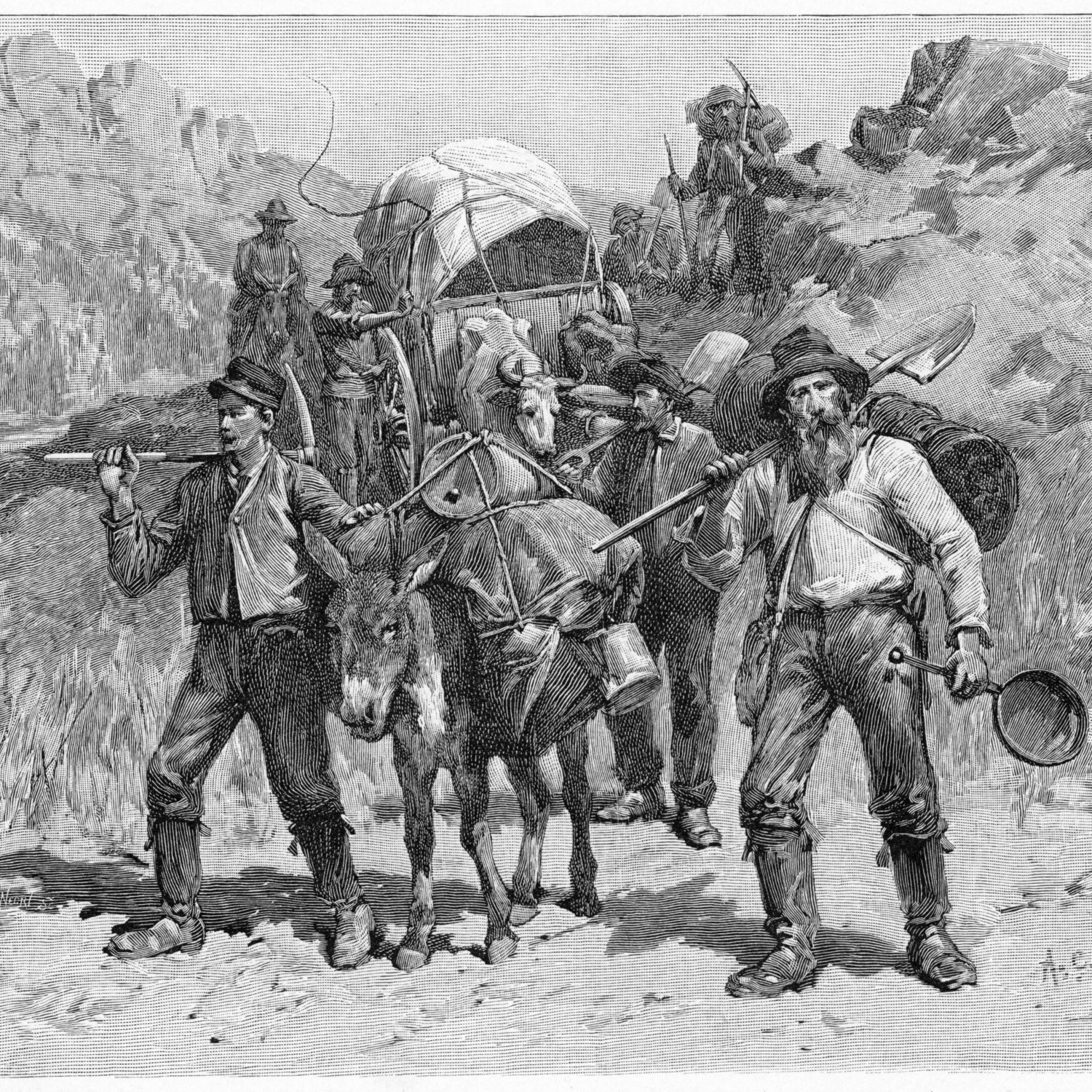
Goldfield developed after gold was discovered near the Superstition Mountains in the 1890s. At its height, the settlement had a post office, boarding houses, shops, saloons, and a bustling population hoping to make its fortune.
The boom did not last. As the quality of the ore declined, the mine struggled, residents moved away, and Goldfield became a ghost town.
The community later experienced another brief revival before fading once more. Today, Goldfield Ghost Town operates as a visitor attraction, offering a playful glimpse of Arizona’s mining era with historic-style buildings, mine tours, shops, and sweeping views of the Superstitions.
Ranches, travelers, and a growing community
Mining legends tend to get the spotlight, but ranching and tourism also helped shape the area.
Ranchers settled near the mountains during the late 19th century, raising cattle in a landscape that demanded resilience and a very healthy respect for the weather. As automobile travel increased, Apache Junction became a stopping point for motorists exploring the Apache Trail and the surrounding desert.
Tourist courts, gas stations, restaurants, and roadside attractions followed. The community’s location near the Superstitions gave it a ready-made identity: part desert outpost, part gateway to adventure, and part Old West legend.
Then Hollywood came calling.
When the Superstitions became movie stars
With dramatic mountains, open desert, and wide Arizona skies, the area offered filmmakers something a studio backlot could not quite duplicate.
Apacheland Movie Ranch opened near the Superstitions in 1960 and was designed as a permanent Western filming location. Over the following decades, its streets, saloon, chapel, and surrounding desert appeared in movies, television programs, and commercials.
Elvis Presley filmed portions of the 1969 Western Charro! at Apacheland. Audie Murphy also worked on productions filmed there, along with numerous actors, stunt performers, directors, and crew members who helped turn the area into a little piece of Hollywood’s Old West.
Apacheland was damaged by fires over the years, and a major fire in 2004 brought its run as a working movie ranch to an end. Several surviving structures, including the Apacheland barn and the Elvis Memorial Chapel, were moved to the Superstition Mountain Museum, where visitors can still see pieces of the area’s filmmaking history.
The Superstitions may not have received top billing, but they were often the most memorable presence on the screen.
Play ball in Apache Junction
Western movies were not the community’s only brush with fame.
In the early 1960s, Apache Junction became the first spring training home of Major League Baseball’s Houston Colt .45s, the team now known as the Houston Astros. The club played at Geronimo Park during the 1962 and 1963 spring training seasons.
The experiment was short-lived, but for a brief moment, fans could watch professional baseball with the Superstition Mountains rising beyond the field. Not every city can claim gold legends, Elvis, and Major League Baseball in the same history.
Becoming an official city
By the 1970s, Apache Junction was no longer simply a highway crossroads or seasonal destination. More people were making it their permanent home, and the growing community needed services, infrastructure, and local representation.
Apache Junction officially incorporated as a city in 1978.
Since then, it has continued to grow while holding tightly to the landscape and stories that make it distinctive. The city’s identity still draws heavily from the Superstition Mountains, Apache Trail, Lost Dutchman legend, and Old West past — but its history is richer and more complicated than any single legend.
It is a history that includes Indigenous homelands, displacement and endurance, mining dreams, working ranches, roadside tourism, Hollywood productions, baseball, and generations of residents building a community beside the mountains.
And then came Blossom Rock
Today, Apache Junction is entering another chapter.
New neighborhoods are welcoming residents who may be seeing the Superstitions from their own streets for the first time. Blossom Rock is part of that continuing story: a new community growing in a place with a very old past.
Learning that past helps us see our surroundings differently. The Flatiron becomes more than a beautiful backdrop. Familiar names such as Waltz, Peralta, Dutchman, and Goldfield carry deeper meaning. Even an ordinary drive through the neighborhood can reveal small echoes of the people, places, and legends that came before us.
Apache Junction has always been a place where paths meet: Indigenous travel corridors and modern highways, documented events and enduring folklore, longtime residents and new neighbors.
Blossom Rock may be one of the newest additions to that story, but we are putting down roots in a place where stories have been taking root for centuries.
Want to keep digging? Explore more stories, photographs, films, and treasure maps through the Apache Junction Public Library’s local history collection.